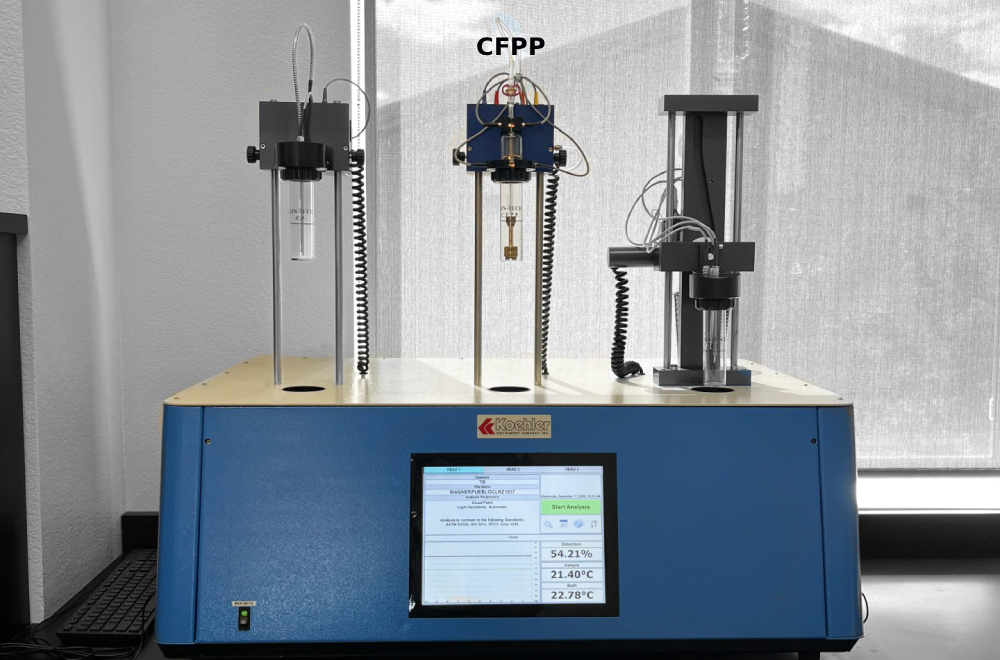


Laboratory Solutions

Shoco Industrial Solutions Laboratory

Our Shoco Industrial Solutions laboratory in Colorado Springs, is a state-of-the-art in-service fluid analysis laboratory designed to help customers maximize equipment life through advanced monitoring of in-service fluids. The lab provides the certification of ultra clean lubricants that are proven to reduce maintenance costs, eliminate unpredicted failures, and extend overall equipment performance and equipment life.

The laboratory specializes in examining oils for cleanliness at the micro-level and serves as the designated certifier for all of Chevron’s ISOCLEAN® Certified Lubricants. Through precise testing and validation, we help customers achieve measurable benefits, including maximized savings, reduced downtime, decreased equipment wear, extended lubrication life, and improved operational reliability.

In addition, the lab provides comprehensive used oil analysis to monitor fluid condition, identify early signs of wear or contamination and support proactive maintenance strategies. We are equipped with 13 instruments, each supporting different testing methods, and are continuing to expand both our instrumentation and our team. These methods are performed by certified lab personnel and the methods themselves are supported by recognized industry standards.

Laboratory Instruments & Testing Capabilities

LaserNet Fines ASTM D7596-24
Patch Test ASTM D7670-10
Viscosity ASTM 7042-25
RDE-AES ASTM D6595-22
Karl Fischer ASTM D6304-25
Foam (ASTM D892-25)
Varnish 25EO1
Demulsibility ASTM D1401-21
FT-IR E2412-23
FLUIDSCAN: Handheld FT-IR ASTM D7889-25
Cloud Point ASTM 57721-21
Cold Filter Plugging Point ASTM D6371-24
Pour Point ASTM 5950-25
LaserNet Fines img

LaserNet Fines ASTM D7596-24

Our LaserNet Fines particle counting instrument assesses machinery and oil health by measuring contamination and wear debris of a lubricant or fuel. During testing, the sample passes through the flow cell, illuminated by a laser, and is captured with a CCD video camera that takes 100 pictures per second to accurately count and classify particles ranging from 4-100 micron in size. The end data is reported as an ISO cleanliness code, the Internation Standard (ISO 4406) for reporting fluid cleanliness.
Patch Test 1
Patch Test 2

Patch Test ASTM D7670-10

The Patch Test process transfers suspended particles in an oil or fuel sample onto the surface of a membrane for a microscopic visual analysis. 25 milliliters of sample are vacuum pumped through a 0.8 micron patch, allowing any contamination or wear debris to settle onto the patch. In combination with the Patch Test and our Microscope, we are able to provide customers with a 100x magnified look at debris and contamination present in the oil or fuel that would otherwise not be perceivable to the human eye.
Viscosity img

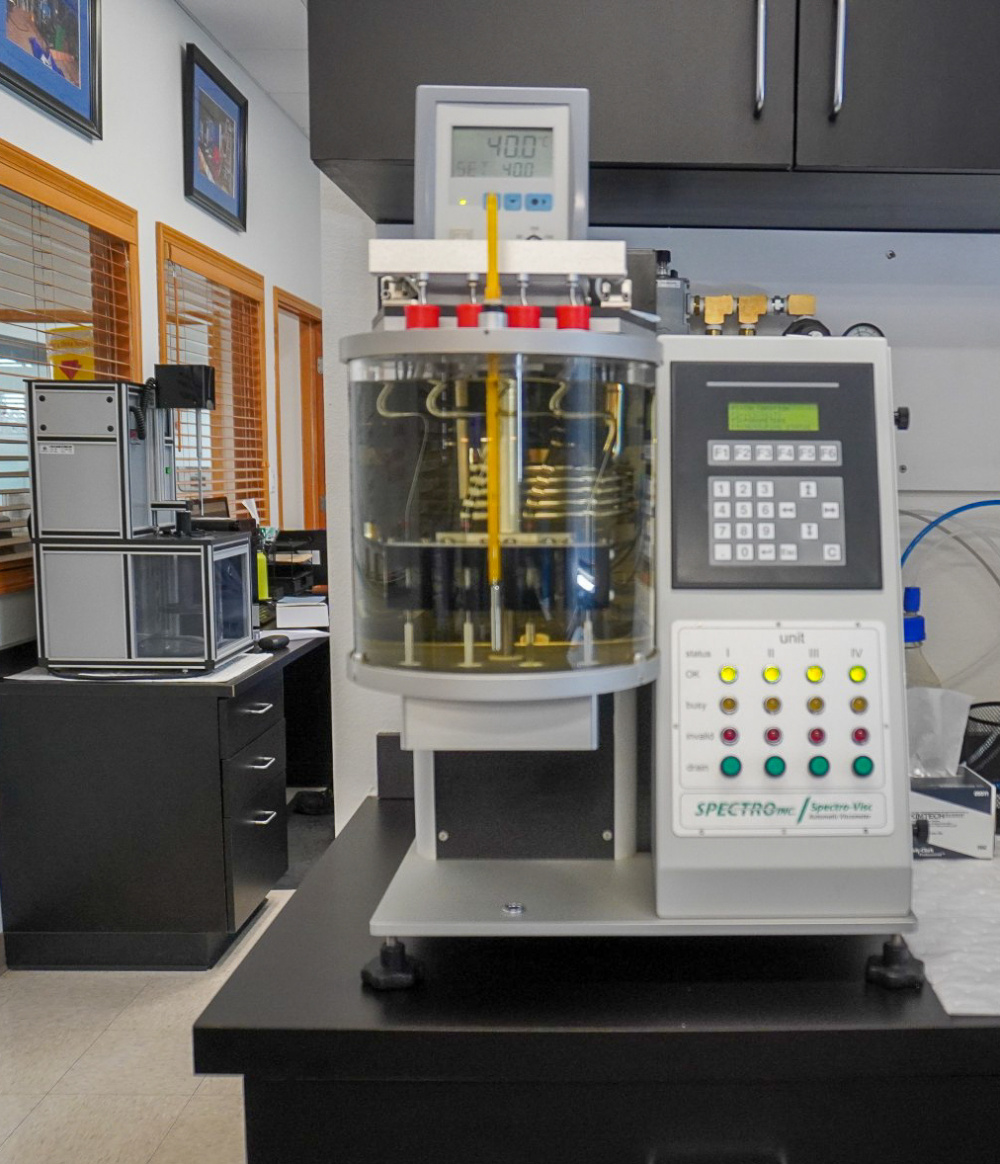
Viscosity ASTM 7042-25

Choosing and maintaining the correct viscosity for your oil is extremely important. With our Automated Viscometer, we can determine the kinematic viscosity of lubricants. The instrument measures the time it takes for a determined volume of oil to flow under gravity through a calibrated glass capillary. The measurement of time is converted into a kinematic viscosity reading by using a determined formula.
RDE AES ASTM D6595 22 img
RDE AES ASTM D6595 22 img 2

RDE-AES ASTM D6595-22

Our RDE-AES instrument can more simply be referred to as the Elemental Analyzer. This fundamental yet very important test is used to determine the concentration levels of 24 different elements in your oil. The data produced off the measurement of these elements gives detailed insight on the levels of wear metals, contaminants, and/or additives found in your oil.
Karl Fischer img

Karl Fischer ASTM D6304-25

Our Automated Karl Fischer instrument tests water content in oil and fuel samples. Making sure the water content levels of your lubricants and fuel are at an acceptable level is important to avoid damage to both machine components and the quality of the lubricant or fuel itself.
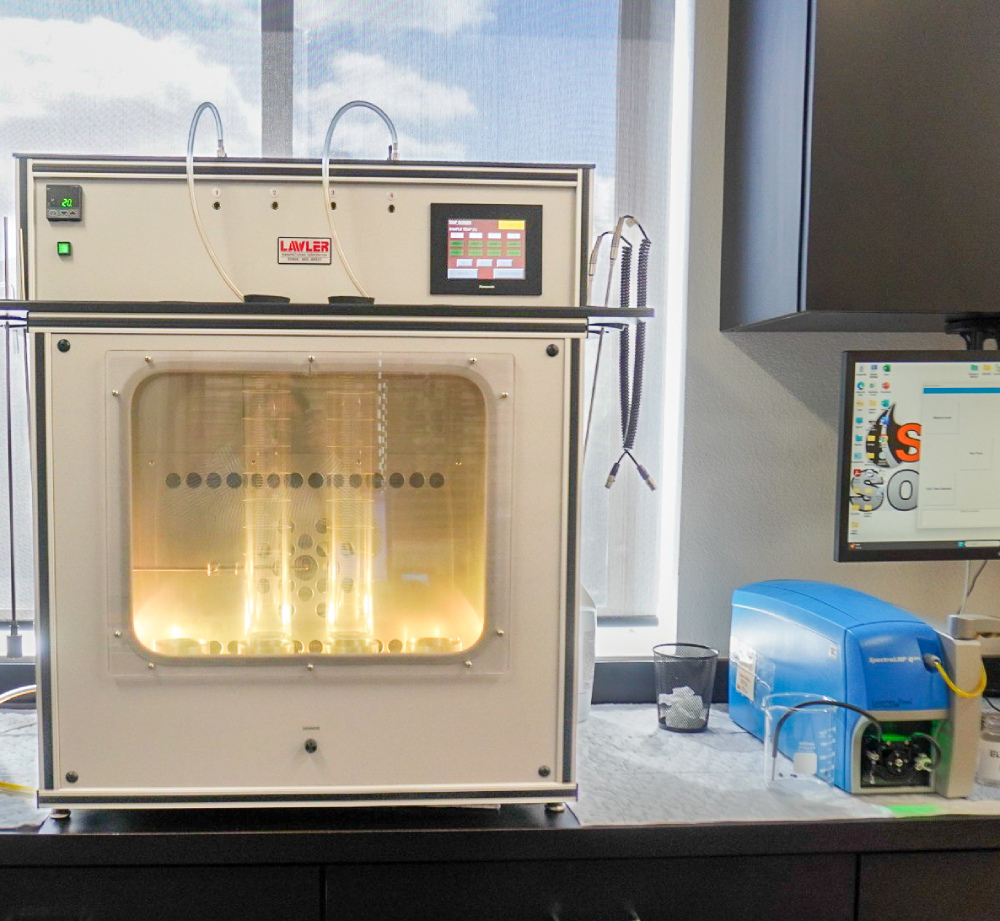
Foam img

Foam (ASTM D892-25)

With our Foam Testing instrument, we can determine the foam tendency and stability of a lubricant. This is an especially important test for customers with high-speed gearing and high-volume pumping systems. The foam tendency of a lubricant is determined by measuring the amount of foam produced after introducing forced air into the sample through a diffusing stone for 5 minutes. Foam stability is determined by measuring the amount of foam remaining after a 10-minute settling period.
VARNISH img

Varnish 25EO1

Oxidation and thermal degradation are the main causes of varnish in a lubricant. With our capability of testing for Varnish Potential, we can help customers avoid downtime with their systems. The testing process allows us to isolate and capture insoluble by-products associated with varnish onto a patch. Using Colorimetric Analysis, the color and hue created on the patch from the insoluble by-products is measured to classify the level of Varnish Potential.
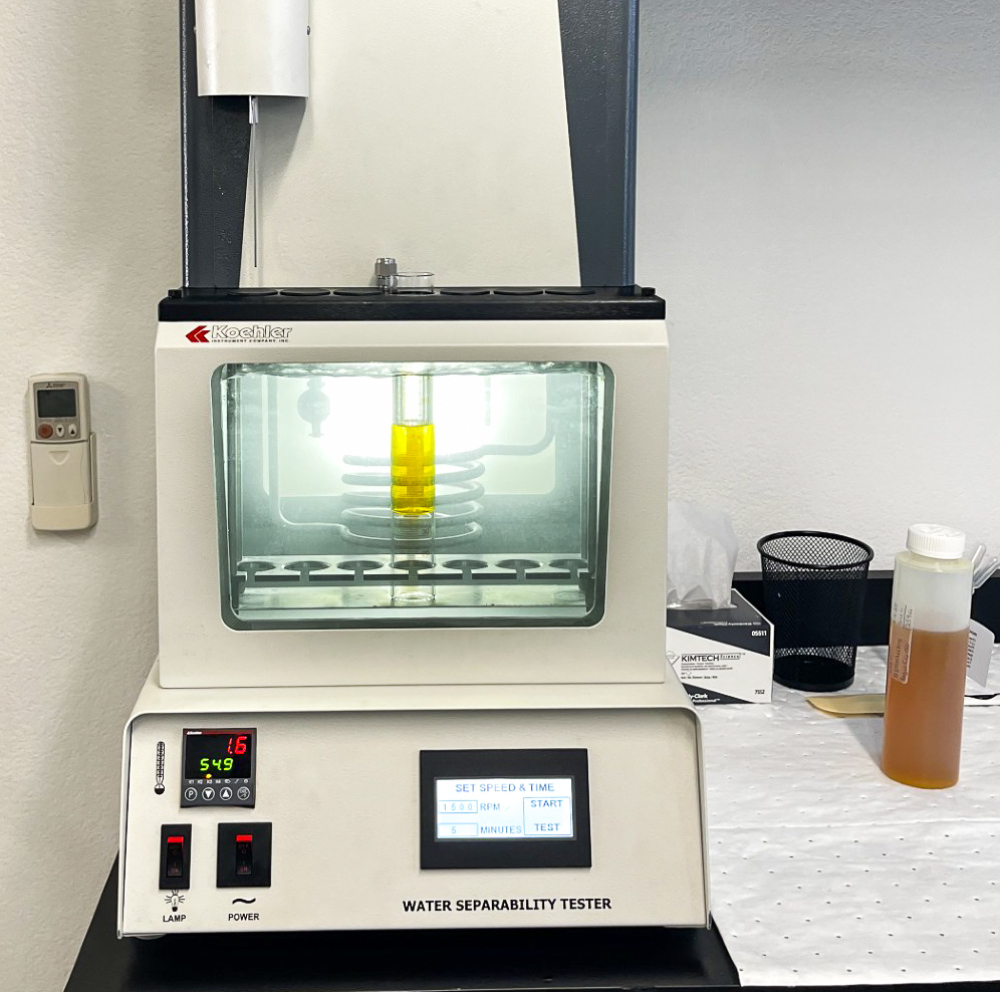
Demulsibility img updated

Demulsibility ASTM D1401-21

For customers using turbine oils or where equipment, operating conditions, or plant atmosphere is susceptible to humid or wet conditions, demulsibility is an important lubricant property. With our Demulsibility instrument we are able to test the lubricant’s ability to separate or release water by mechanically mixing 1 part oil to 1 part water and timing the separation of the two.
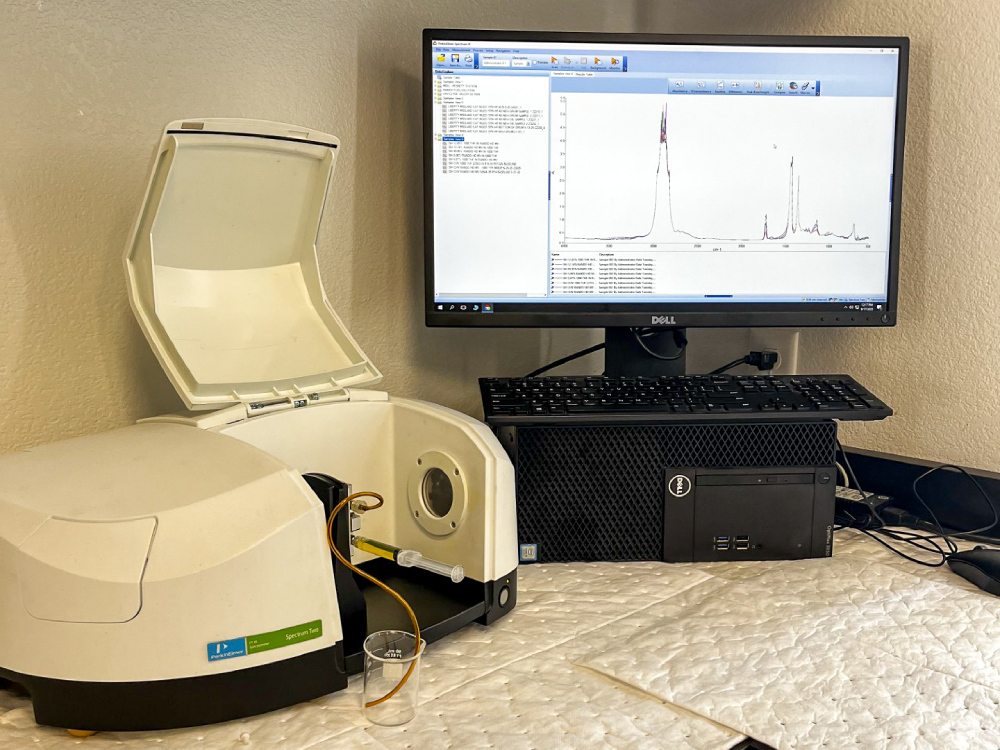
FT IR img

FT-IR E2412-23

Using our Fourier Transform Infrared Spectrometer, we can quickly assess multiple lubricant characteristics such as common contaminants, lube degradation byproducts, dilution, and additives. Antioxidants, soot, water, fuel, glycol, and oil oxidation are among the list of parameters that can be measured using this instrument. The molecules of a lubricant absorb the infrared radiation at specific wavelengths, creating a spectrum of data.
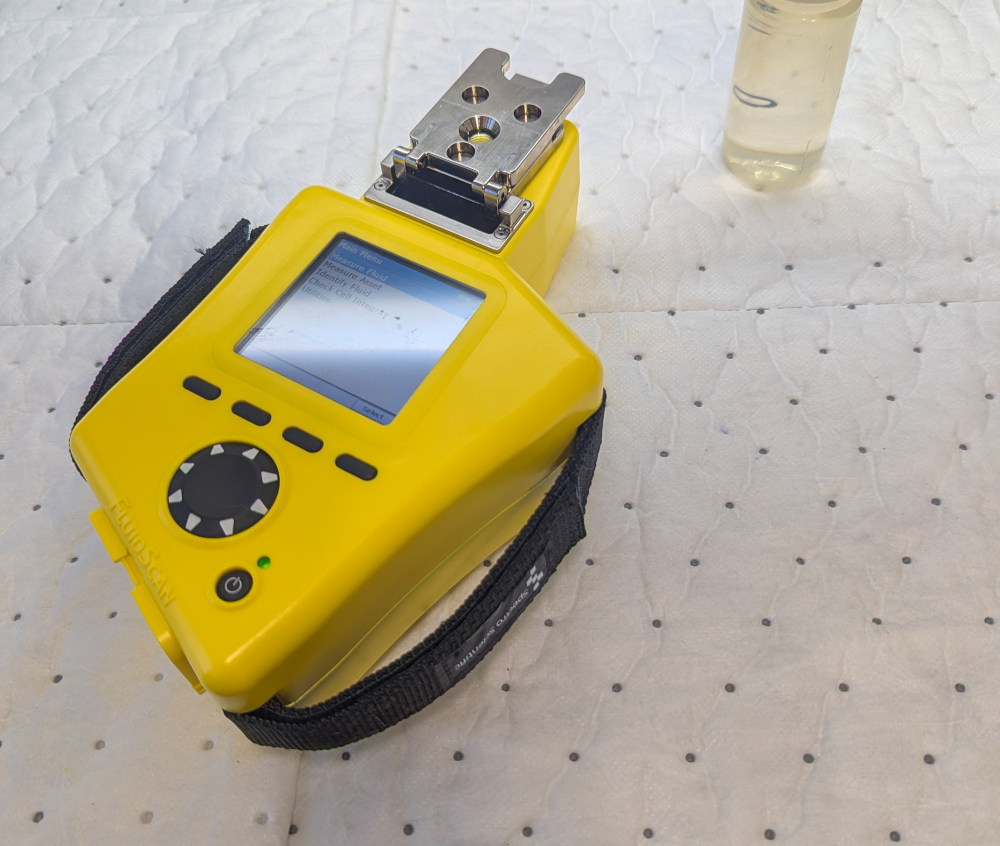
HANDHELD FTIR

FLUIDSCAN: Handheld FT-IR ASTM D7889-25
Our FluidScan handheld oil analyzer allows for in-field Infrared Radiation Spectroscopy analysis. This instrument generates on-site oil characteristics analysis data for our customers’ lubricants, with results reflecting those of our in-lab FT-IR instrument.
Cloud Point img with label
orangle blob shape

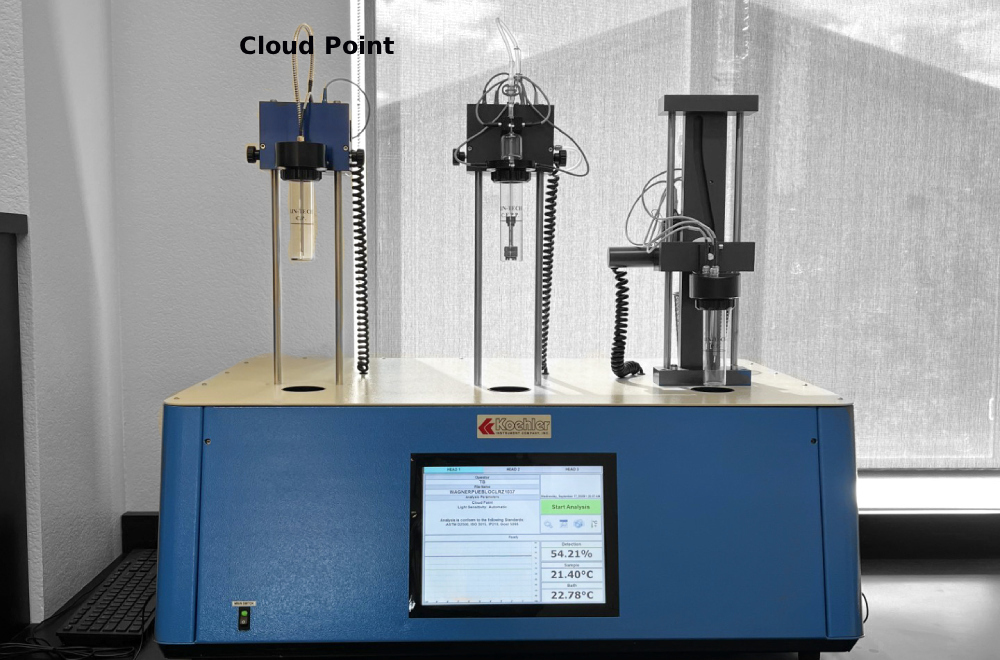
Cloud Point ASTM 57721-21

With our Cloud Point analytical head we can identify the temperature at which wax crystals begin to form within a fuel, which can negatively impact engine performance. During the test process, the sample is slowly cooled in a thermal sleeve where sensor probes continuously read back and forth from one another inside the sample cylinder. Once wax crystals begin to form and create a cloudy appearance in the fuel, the back-and- forth reading between sensors gets blocked. At this temperature we have determined the fuels Cloud Point.
CFPP img with Label
orangle blob shape

Cold Filter Plugging Point ASTM D6371-24
Our Cold Filter Plugging Point instrument allows us to provide customers with a temperature point at which their fuel’s filterability will begin to be compromised, leading to restrictions of fuel flow to the engine. During the testing process, the Cold Filter Plugging Point of a fuel sample is called at the lowest temperature where a determined volume of fuel is still able to pass through a standardized filter within 60 seconds.
orangle blob shape
Pour Point img with label

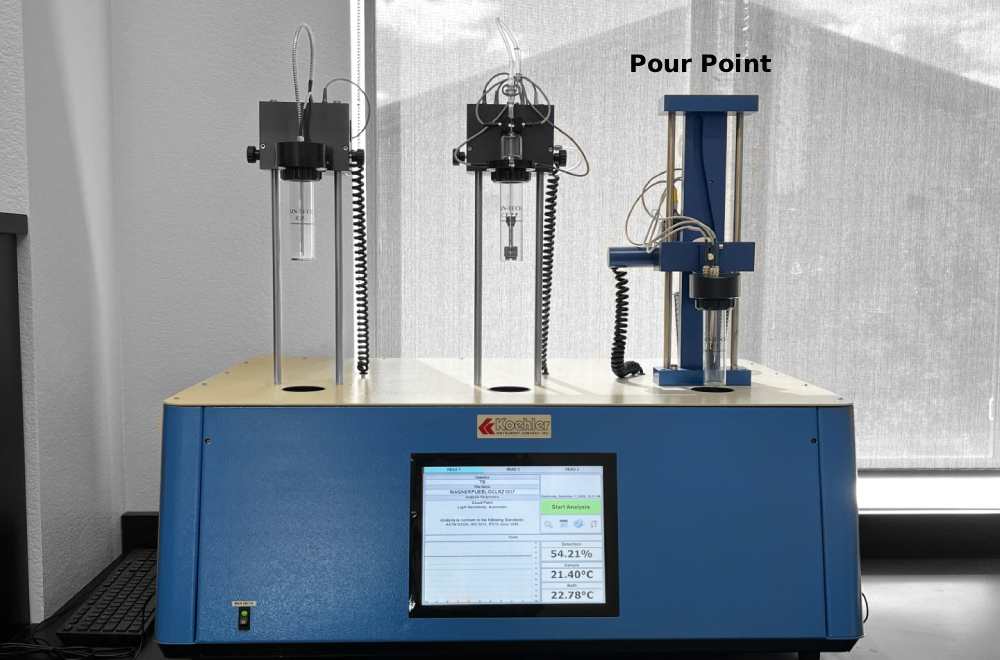
Pour Point ASTM 5950-25

The Pour Point of a fuel or lubricant is the lowest temperature in which it can still flow freely under gravity. The automated analytical head pulls the sample out of the thermal sleeve at each cooling temperature and tilts to a 45-degree angle, where the sample will flow freely and make contact with a sensor probe. Pour Point is determined as the last temperature where contact was made.

Laboratory Services

In-House Testing and Reporting on New & Used Lubricants:

  • LaserNet Fines (Particle Count)
  • Patch Test (Microscopic Visual Analysis)
  • Viscosity (40°C & 100°C)
  • Karl Fischer (Water Content)
  • RDE-AES (Elemental Analysis)
  • FT-IR
  • Foam Testing
  • Varnish Potential
  • Demulsibility (Water Separability)

In-House Testing and Reporting on Diesel Winter Properties:

  • Cloud Point
  • Cold Filter Plugging Point
  • Pour Point

In-House Testing and Reporting on Diesel Cleanliness:

  • LaserNet Fines (Particle Count)
  • Patch Test (Microscopic Visual Analysis)
  • Karl Fischer (Water Content)
  • Viscosity (40° C & 100° C)

    Testing by Spectro Vis Automatic Viscometer ASTM 7042-25 Kinematic Viscosity

  • Water (% & PPM)

    Testing by Coulometric Karl Fischer Titration ASTM D6304

  • ISO Cleanliness Code (Particle Count)

    Testing by Laser Net Fines ASTM D7670-10

  • Varnish Potential Measurement of Lubricant Generated Insoluble Color Bodies in In-Service Turbine Oil using Membrane Patch Colorimetry ASTM D 7843

  • Foaming Characteristics of Lubricating Oils

    Testing by foam testing apparatus Foam (ASTM D892-25)

  • Oil Demulsibility (Water Seperability)

    ASTM 1401-21 Standard Test Method for Demulsibility

  • Spectro Q1000 Fluidscan

    Testing of in-field lubricant condition

  • Spectro Q1000 Testing

    ASTM D4406 – Visual particle testing